

Exterior painting on commercial properties involves elevated work, specialized equipment, and active building environments. Falls from heights remain one of the leading causes of construction-related injuries, and occupied properties add coordination requirements that residential projects rarely demand. For property managers and facilities leaders, selecting a contractor with documented safety practices directly affects liability exposure, project timelines, and tenant satisfaction.
A single accident can trigger workers’ compensation claims, property damage disputes, and regulatory fines that exceed the cost of the painting project itself. Arch Painting, Inc delivers exterior painting services with the OSHA compliance and trained crews that commercial property owners need to protect their investments.
Key Takeaways: What to Ask About Exterior Painting Jobsite Safety
- Request current OSHA compliance documentation and workers’ compensation insurance from every exterior painting contractor before signing a contract.
- Verify that all crew members hold fall protection certifications and receive regular elevated work platform training for your occupied property.
- Ask how the contractor plans to control work zones, protect pedestrian areas, and coordinate scheduling around your building operations.
- Arch Painting, Inc maintains strict jobsite safety protocols, OSHA compliance, and trained crews to protect both your property and building occupants.
- Confirm the contractor carries sufficient liability coverage and can provide documentation of a documented safety management system.
Why Jobsite Safety Matters for Exterior Painting Projects
Commercial exterior painting projects often take place while buildings remain fully operational. Tenants continue working, visitors enter and exit, and vehicles move through parking areas. A responsible contractor accounts for these realities in every project plan.
Improper safety protocols create risks beyond crew injuries. Equipment left in walkways, unmarked work zones, and uncontrolled access areas can result in third-party injuries that become the property owner’s liability concern. The Occupational Safety and Health Administration (OSHA) sets strict guidelines for fall protection, scaffolding, and hazardous material handling that professional contractors follow to protect everyone on site.
What Safety Certifications Should Exterior Painting Contractors Have?
Several certifications signal that an exterior painting contractor takes safety seriously. OSHA compliance documentation is the baseline requirement for any commercial contractor working in the United States. Beyond this foundation, look for credentials specific to elevated work and hazardous material handling.
Fall Protection and Elevated Work Certifications
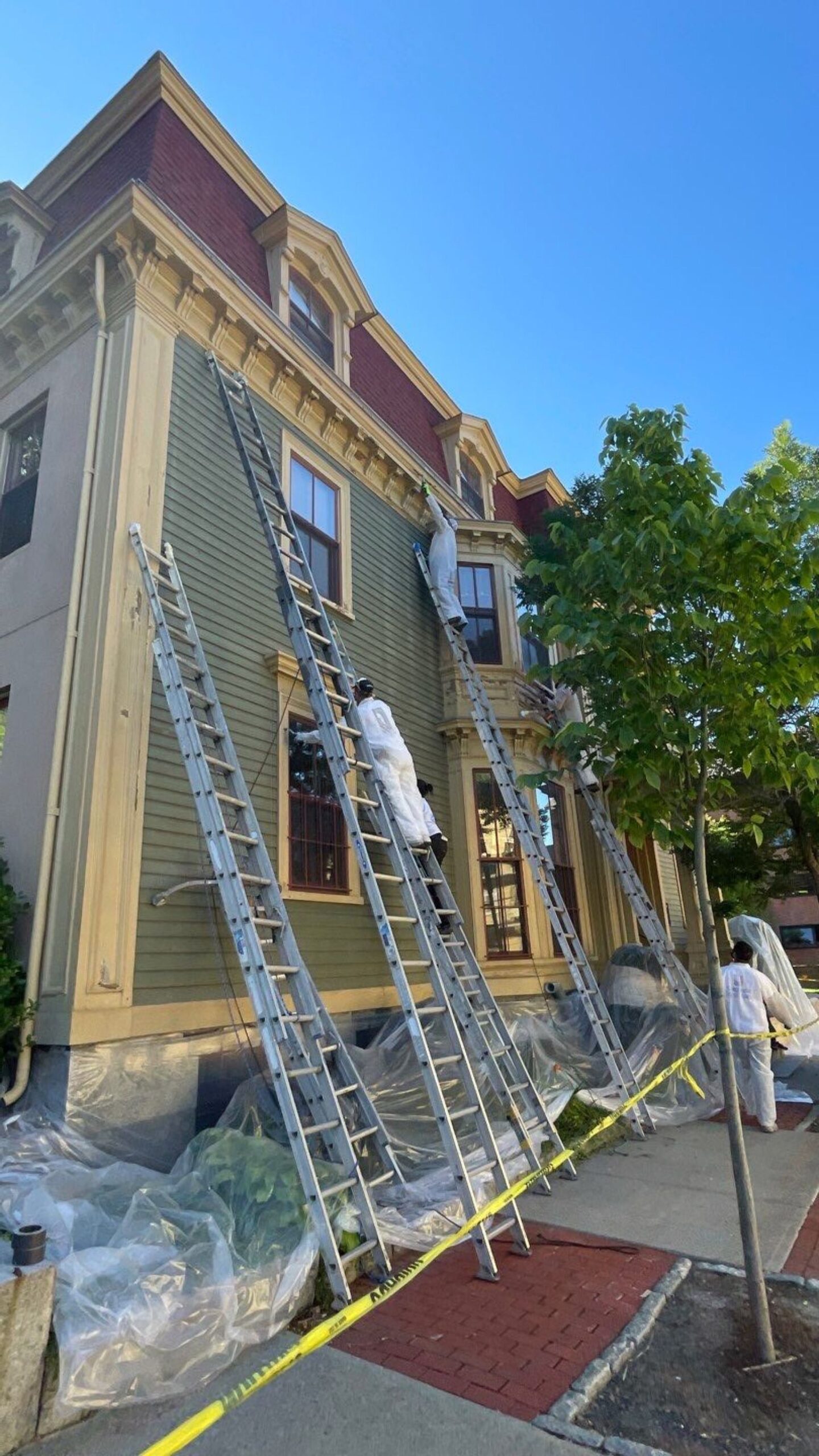
Exterior painting frequently requires scaffolding, boom lifts, and ladder work at significant heights. Contractors should provide documentation showing that crew members have completed fall protection training and maintain current certifications for the specific equipment they operate.
The ANSI/ASSP A10.8 standard governs safe scaffolding use in construction and painting applications. A contractor familiar with this standard understands proper setup, inspection, and dismantling procedures that prevent scaffold-related accidents.
EPA Lead-Safe Certification
Buildings constructed before 1978 may contain lead-based paint. The EPA’s Renovation, Repair, and Painting (RRP) Rule requires contractors working on these structures to hold Lead-Safe certification. This credential demonstrates training in containment, removal, and disposal practices that protect workers and building occupants from lead exposure.
Questions to Ask About Fall Protection and Elevated Work
Before awarding a contract, ask specific questions about how the contractor manages elevated work on occupied properties. The answers reveal both technical competence and operational awareness.
- What fall protection systems does your crew use when working above six feet?
- Are all crew members trained and certified to operate aerial lifts and scaffolding?
- How often does your company inspect elevated work equipment?
- How do you establish and mark work zones around elevated operations?
- What ground guide protocols do you follow when operating lifts near pedestrian areas?
Why This Matters for Property Managers
Falls account for a significant portion of painting contractor injuries. A contractor with documented fall protection protocols reduces accident risk and demonstrates the operational discipline that extends to other aspects of project execution. When crew members understand and follow safety procedures consistently, project quality tends to follow.
How Should Contractors Protect Occupied Properties?
Professional contractors establish clearly marked and barricaded work zones that separate painting operations from pedestrian and vehicle traffic. This includes proper signage, physical barriers, and daily adjustment as work progresses across different building facades.
Scheduling Coordination
Ask how the contractor plans to coordinate scheduling with your building operations. This includes timing work to avoid peak traffic periods, communicating advance notice to affected tenants, and adjusting work areas to maintain access to entrances and parking facilities.
Daily Cleanup Procedures
Equipment left overnight, paint spills, and debris create trip hazards and liability concerns. A contractor with strong safety practices maintains organized work areas and completes daily cleanup before leaving the jobsite. Arch Painting, Inc schedules work to minimize impact on facility operations and maintains clean, organized jobsites throughout every project.
What Insurance Coverage Should Exterior Painting Contractors Carry?
Insurance verification is a non-negotiable step before any exterior painting project begins. Request a certificate of insurance and confirm that coverage includes both general liability and workers’ compensation at limits appropriate for your project scope.
- General liability coverage protects against third-party injury and property damage claims
- Workers’ compensation coverage protects against claims from injured crew members
- Umbrella or excess liability coverage provides additional protection for larger projects
A contractor who hesitates to share insurance documentation or provides policies with insufficient coverage should be removed from consideration. The cost of verifying proper insurance is minimal compared to the exposure from an uninsured or underinsured incident.
How to Evaluate a Contractor’s Safety Record
Past performance offers valuable insight into how a contractor manages safety. Request documentation that demonstrates ongoing commitment to safe practices.
Documentation to Request
- Written safety program or safety management system documentation
- Incident and near-miss reporting records
- Crew training schedules and certification renewals
- Equipment inspection logs
- Job-site hazard assessment procedures
A contractor with a documented safety management system has formalized procedures that reduce variability between crews and projects. This consistency translates to predictable performance on your property.
Reference Checks
Ask for references from facilities similar to yours in size, complexity, and occupancy type. When speaking with references, ask specifically about safety performance, communication during the project, and how the contractor handled any incidents or challenges that arose.
Air Quality and Material Safety Considerations
Exterior painting involves coatings that require proper ventilation and handling, even when applied outdoors. For properties with occupied spaces near the work area, air quality management becomes an important safety consideration.
Low-VOC and Eco-Friendly Options
Volatile organic compounds (VOCs) in traditional paints can affect air quality and cause health concerns for building occupants. Ask whether the contractor offers low-VOC or zero-VOC coating options that minimize odors and maintain indoor air quality during exterior work.
Arch Painting, Inc uses low-VOC and eco-friendly paints across commercial painting projects, helping protect air quality while delivering durable exterior finishes.
 Hazardous Material Protocols
OSHA’s Hazard Communication Standard requires contractors to inform workers about hazardous chemicals in the workplace through proper labeling, safety data sheets, and training. A contractor following these protocols demonstrates attention to detail that extends to other safety practices.
Site-Specific Hazard Assessment
Every commercial property presents unique safety challenges. A reputable contractor conducts a site-specific hazard assessment before work begins, identifying risks related to building configuration, electrical systems, mechanical equipment, and pedestrian traffic patterns.
Questions to Ask About Hazard Assessment
- Will you conduct a pre-project walkthrough to identify site-specific hazards?
- How do you document and communicate identified hazards to your crew?
- What procedures do you follow when working near electrical equipment or HVAC systems?
- How do you protect landscaping, parking surfaces, and building systems during the project?
Contractors who invest time in hazard assessment before mobilizing crews typically deliver projects with fewer surprises and better outcomes.
In Conclusion: Selecting a Safety-Focused Exterior Painting Partner
For property managers and facilities leaders, exterior painting projects represent both an opportunity to enhance property value and a potential liability risk. The contractor you select determines which outcome you experience.
Safety-focused contractors share common characteristics: documented procedures, transparent communication, trained crews, proper insurance coverage, and a track record of successful projects on occupied commercial properties. By asking the right questions before awarding a contract, you can identify partners who approach exterior painting as a strategic investment rather than a maintenance task.
The time spent vetting contractor safety practices represents a small fraction of project cost while significantly reducing your exposure to accidents, delays, and liability concerns.
FAQs about What to Ask About Exterior Painting Jobsite Safety
What OSHA certifications should exterior painting contractors have?
Exterior painting contractors should demonstrate OSHA compliance through documented safety programs, fall protection training for all crew members, and proper hazard communication protocols. Look for contractors who maintain current certifications in scaffolding and aerial lift operation specific to elevated work on commercial properties.
How can I verify a painting contractor’s insurance coverage?
Request a certificate of insurance directly from the contractor before any work begins. Verify that the policy includes general liability and workers’ compensation coverage at appropriate limits. Confirm the policy is current and will remain active throughout your project duration.
What fall protection should contractors use for exterior painting?
Contractors should use guardrails, personal fall arrest systems, and safety nets appropriate to the work height and building configuration. Arch Painting, Inc crews follow strict fall protection protocols and maintain certifications for all elevated work equipment used on commercial properties.
How do painting contractors protect occupied buildings during exterior work?
Professional contractors establish marked work zones with barriers and signage, coordinate scheduling around building operations, and maintain organized daily cleanup procedures. They communicate advance notice to building management and affected tenants before starting each phase of work.
Why is lead-safe certification important for exterior painting?
Buildings constructed before 1978 may contain lead-based paint that poses health risks if disturbed improperly. EPA Lead-Safe certification demonstrates that the contractor has training in containment, removal, and disposal practices that protect building occupants and comply with federal regulations.
What questions should I ask about a contractor’s safety record?
Request documentation of their written safety program, incident reporting records, crew training schedules, and equipment inspection logs. Arch Painting, Inc maintains a documented safety management system and provides transparent safety records to property managers evaluating contractor qualifications.
Related Posts

The holiday season is one of the most important revenue periods of the year for restaurants. From corporate holiday parties and family gatherings to seasonal [...]

Retail & Restaurant Facility Business: A fresh coat of paint is one of the most economical ways a retailer, shopping plaza or restaurant can update [...]
Great Place To Work® and Fortune have selected Arch Painting®, the leading nationwide commercial painting contractor, for the 2026 Fortune Best Workplaces in Construction™ List. [...]